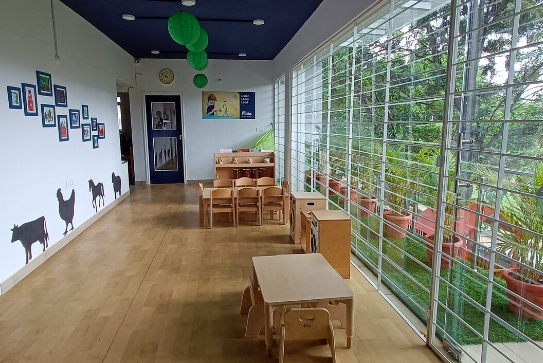
Nursery school is an early childhood education setting designed primarily for children aged three to four years old. It offers a group experience that combines day care with structured learning activities to support social, emotional, and cognitive development. It provides a safe and nurturing environment where children begin to build foundational skills through play and guided interaction.
These programs focus on helping children develop independence, creativity, and early social skills that prepare them for the next step in their education, such as preschool or kindergarten. Nursery schools often balance free play with age-appropriate activities led by qualified teachers, supporting the whole child’s growth in a supportive setting.
Families choosing nursery school look for environments that foster hands-on learning and positive social engagement. Whether offered through faith-based, cooperative, or licensed child care centers, nursery schools play a key role in a child’s early learning journey.
What Is Nursery School?
Nursery school serves as an early educational setting where young children begin structured learning experiences. It caters to a specific age range and has distinct goals and formats that set it apart from related early childhood programs.
Definition and Purpose
Nursery school is an educational environment designed for young children to develop social, cognitive, and emotional skills before entering compulsory education. It emphasizes a balance of play-based and simple instructional activities. The goal is to promote holistic development, supporting language, motor skills, and social interaction.
It operates as a structured program, often organized by schools, religious groups, or child welfare organizations. Unlike informal care environments, nursery schools focus on early learning fundamentals and preparing children for more formal schooling stages.
Age Groups Served
Typically, nursery schools enroll children aged 3 to 5 years. This age group is chosen because it lies just before mandatory primary education begins. The programs focus on this developmental window to foster early growth and readiness for the next phase of education.
Some nursery schools accept children as young as 2 or extend up to age 6, depending on regional regulations and school models. Age-specific activities cater to the developmental needs, ensuring children gain skills appropriate to their stage of growth.
Key Differences From Preschool
Although often used interchangeably, nursery school and preschool have subtle distinctions. Nursery school may include a broader mix of care and early learning, sometimes incorporating day care elements.
Preschool typically has a stronger academic emphasis on preparing children specifically for kindergarten. Nursery schools often focus more on play-based learning and social skills in addition to early academics.
|
Aspect |
Nursery School |
Preschool |
|---|---|---|
|
Primary Focus |
Holistic development, play, socialization |
Academics, kindergarten readiness |
|
Age Range |
Usually 3-5 years |
Usually 3-5 years |
|
Structure |
Can include care elements |
More structured learning |
Choosing a Nursery School
Selecting a nursery school involves evaluating essential aspects that impact a child’s early education and development. Parents should carefully assess the school’s legal status, educational content, and the qualifications of its staff to make an informed decision.
Accreditation and Licensing
Accreditation and licensing ensure that a nursery school meets government standards for safety, hygiene, and educational quality. A licensed school must comply with local regulations regarding facilities, staff-to-child ratios, and health practices.
Parents should verify the school’s accreditation with recognized bodies. Accreditation often indicates adherence to a curriculum framework and ongoing quality assessments. It also provides assurance that the nursery is subject to regular inspections and meets established criteria for child care and education.
Choosing a school with proper accreditation reduces risks related to inadequate supervision and unsafe environments. It also signals a commitment to continuous improvement and accountability.
Curriculum and Learning Approach
The curriculum shapes how children develop cognitive, social, and emotional skills during nursery. A clear, structured program supports milestones such as language, motor skills, and social interaction.
Parents should look for curriculums that balance play-based learning with guided activities. Popular approaches include Montessori, Reggio Emilia, and the Early Years Foundation Stage (EYFS), each emphasizing different developmental priorities.
The learning approach should align with the child’s personality and family values. Schools that promote creativity, curiosity, and independence often foster better engagement and confidence in children. Documentation of daily activities and progress reports can reflect curriculum implementation quality.
Teacher Qualifications
The skills and training of nursery teachers directly influence the quality of early education. Qualified educators typically hold certifications in early childhood education or related fields.
Teachers should demonstrate experience in age-appropriate teaching methods, child development, and behavior management. Ongoing professional development is important to keep pace with best practices and new research.
Low student-to-teacher ratios allow for personalized attention and safer supervision. Parents may request information about staff turnover rates to understand the stability of the teaching environment. Confident and well-trained teachers contribute to a nurturing and effective learning atmosphere.